01
Your hippocampal volume, as a number
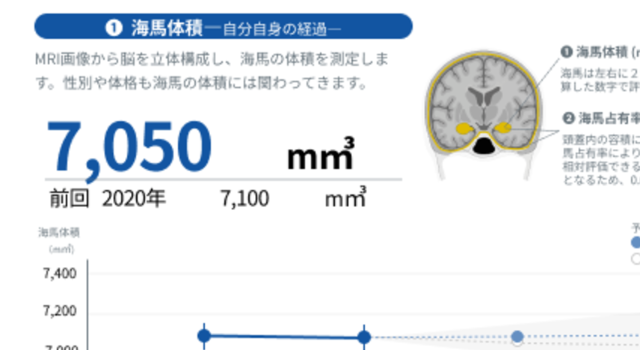
AI automatically extracts the left and right hippocampus and calculates the volume in cubic millimetres.

MRI screening of the hippocampus
From the head MRI images taken of you, AI automatically measures the volume of the hippocampus, the region that governs memory. You receive a clear report showing where you stand compared with the average for your age group. BrainSuite was developed under the supervision of the Institute of Development, Aging and Cancer, Tohoku University.
What you can know
01
AI automatically extracts the left and right hippocampus and calculates the volume in cubic millimetres.
02
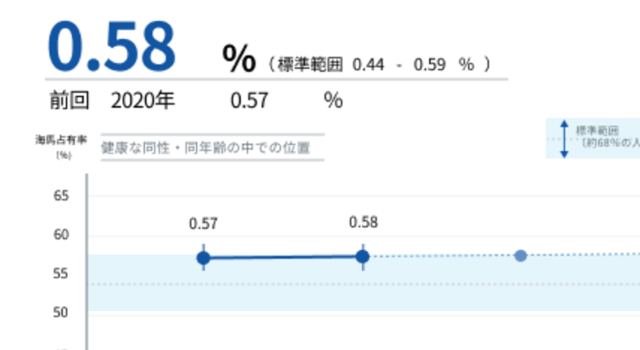
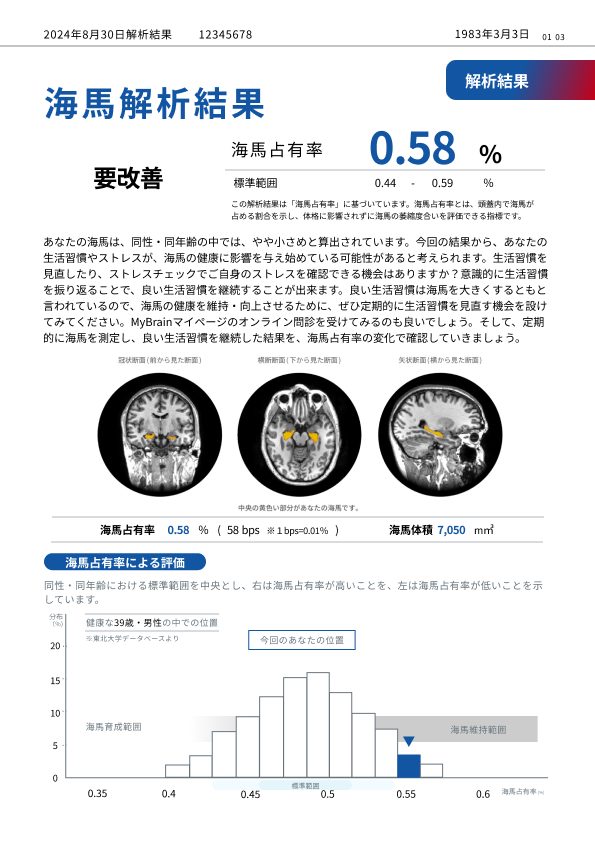
Your result is plotted together with the average for the same sex and age group, so you can see where you stand on a graph.
03
Depending on your result, the report suggests habits you can start today.
The sample images on this page are taken from the Japanese report and app.
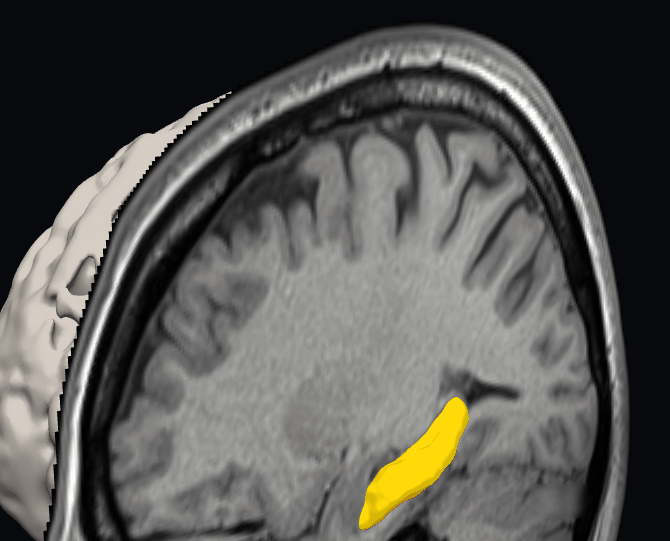
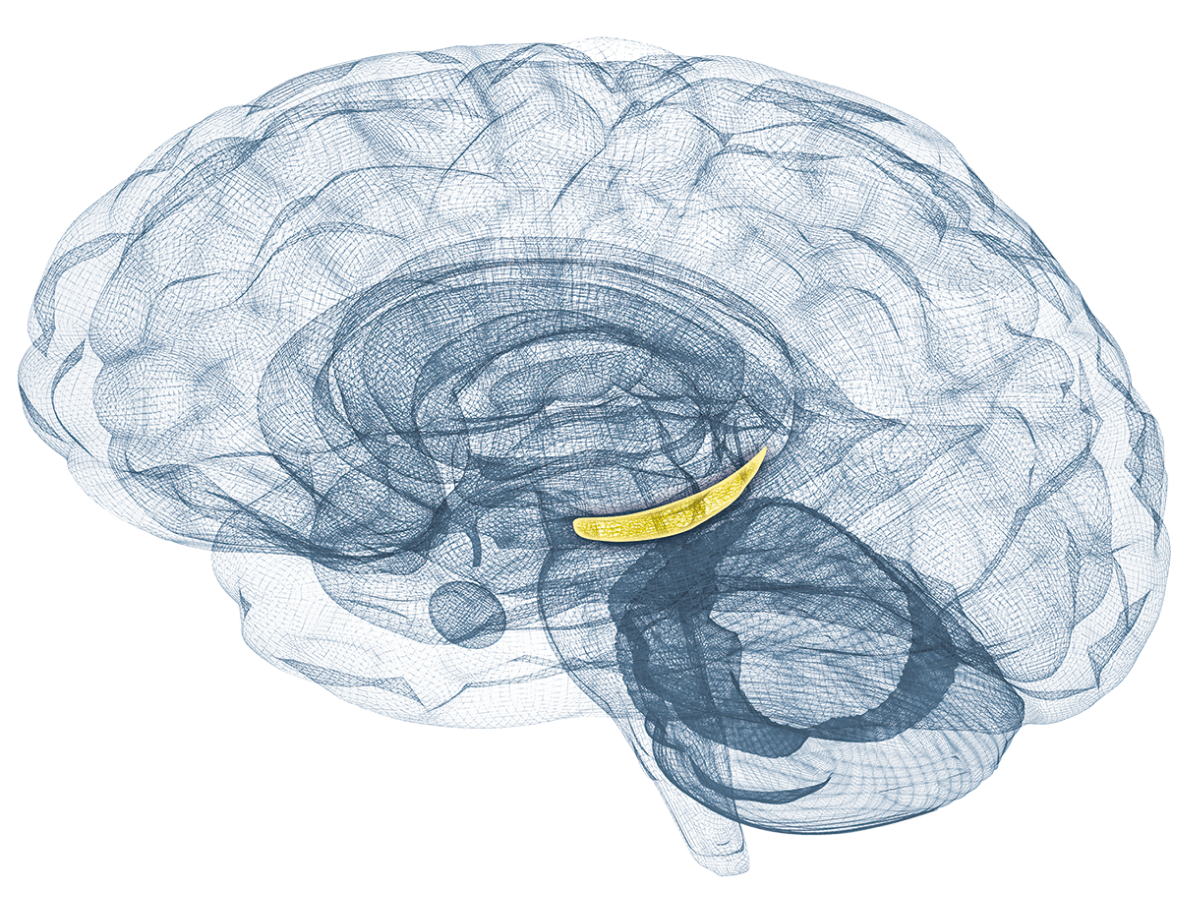
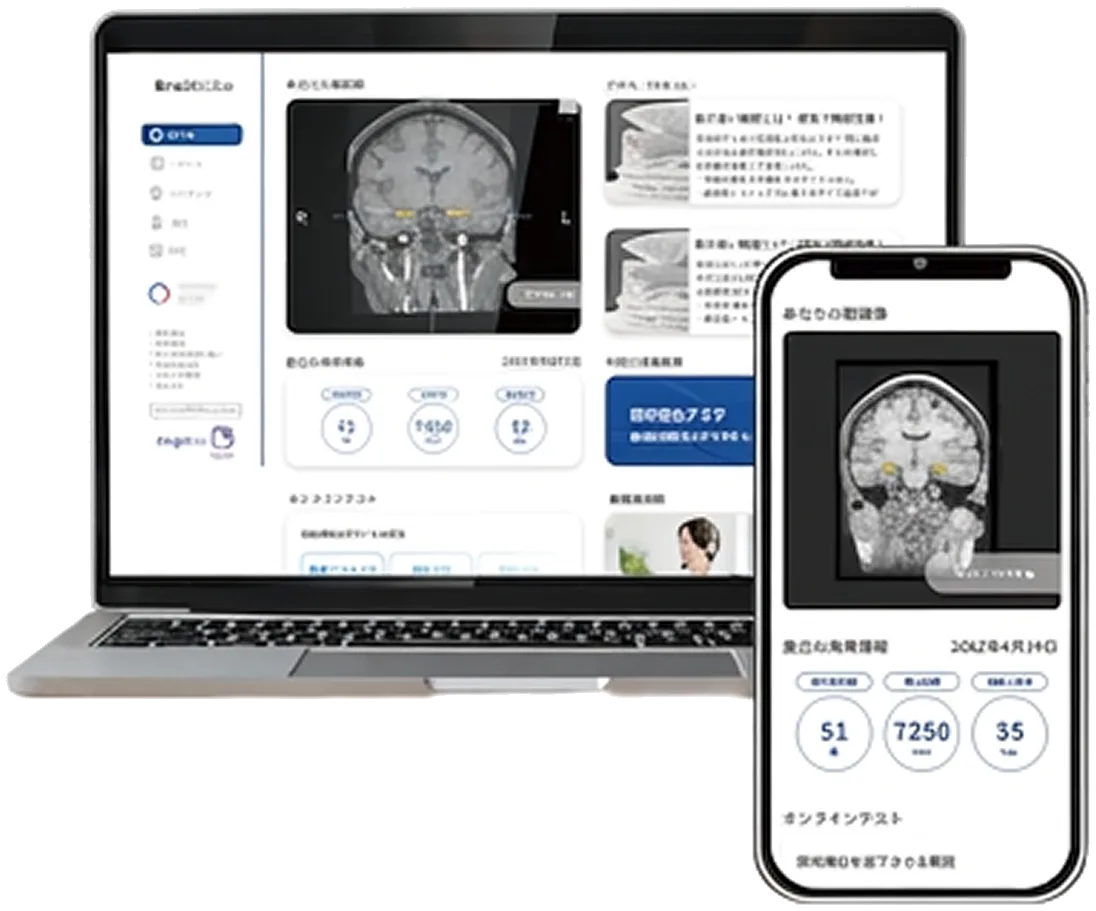
From an actual analysis screen: the area in yellow is the hippocampus as identified by the AI.
The hippocampus is the gateway to memory — it works when you learn something new — and it is also the brain’s control tower, putting what you learn to use together with other brain functions. It is a small region, less than one per cent of the whole brain, and it is one where atrophy with age can be seen.
It is also a place where the effects of how you live show up comparatively readily, not only the effects of age.
Because it begins to change little by little long before you notice any decline in memory, capturing the hippocampus as a number gives you one indicator for maintaining cognitive function.
AI analysis
BrainSuite automatically extracts the left and right hippocampus from the head MRI images taken of you and calculates the volume in cubic millimetres. Using an analytical model built from a large body of brain image data, it shows where you stand now, objectively, against the average for the same sex and age group.
How the AI automatically extracts the left and right hippocampus from head MRI images.
Report
CONTENTS
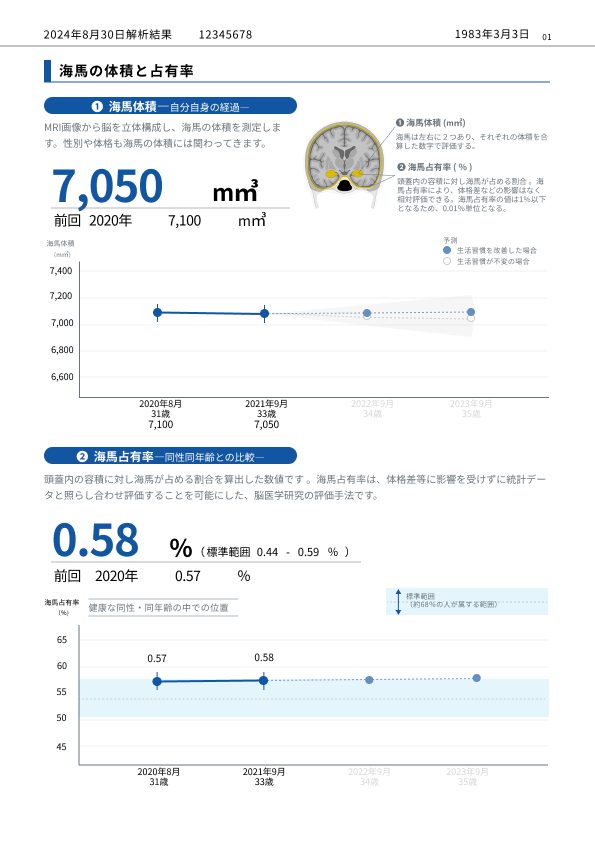
The report is made up of four parts.
The volume of each side and the total are shown as numbers.
You can see at a glance where you sit within the distribution for the same sex and age group.
The cross-sectional images actually taken, and the hippocampal region the AI identified.
Suggestions for your next step, from four angles: exercise, sleep, diet and social connection.
The report shown here is the Japanese version. An English version exists, but whether it is offered is decided by each medical institution — please check with the institution before you book.
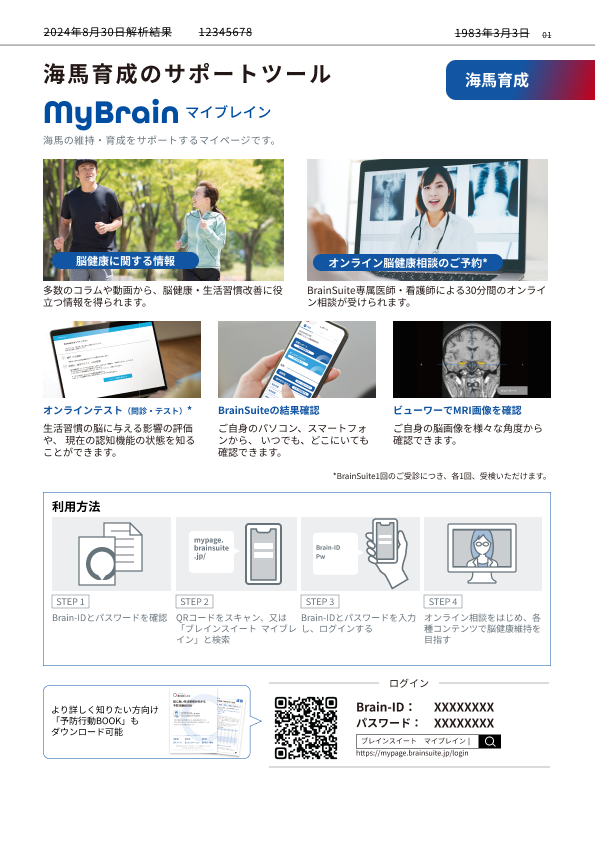
MyBrain is a members-only site for maintaining and improving your brain health. If you have had BrainSuite, you can review your results, take the online health questionnaire and the memory and concentration tests, and book an online brain health consultation.
It also offers content you will not find anywhere else, including information on brain health such as sleep, diet and exercise, and a viewer that lets you see the brain images taken of you in 3D.
MyBrain is available in Japanese only.
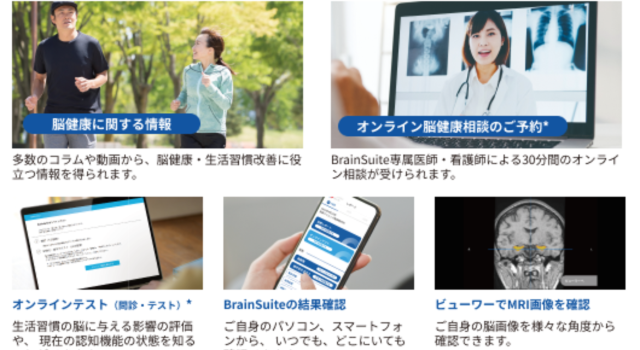
Plenty of information on brain health.
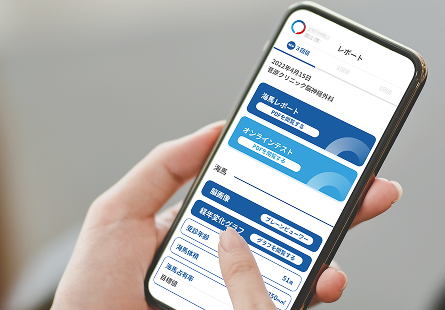
Review your BrainSuite results
From your own computer or smartphone, any time, anywhere in Japan.
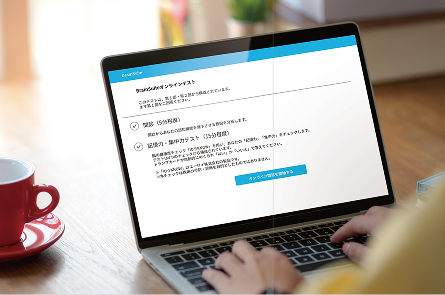
Online tests (health questionnaire, memory and concentration tests)
Find out how your daily habits may be affecting your brain, and where your cognitive function stands now.
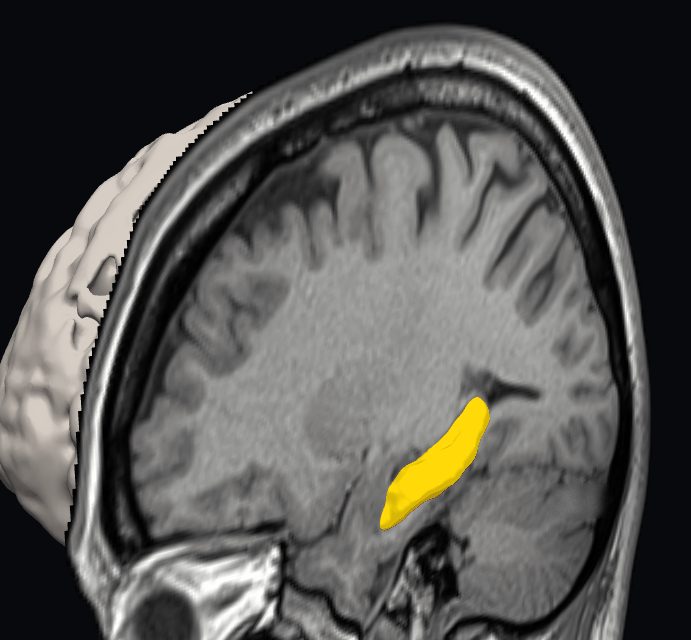
See your brain images in the viewer
View the brain images taken of you from a range of angles. The area marked in yellow is the hippocampus.

Book an online consultation
A 25-minute online consultation with CogSmart’s own physicians and nurses, free the first time.

Plenty of content on brain health
A large collection of columns and videos to help with brain health and improving daily habits.
← Scroll sideways to see them all (5 items)
BrainSuite is not a one-off. By having it a second and a third time, you can follow change over the years as you would with a health check, and review what you are doing to prevent decline.
Flow of the day
0
You can buy a ticket online, or apply directly to a medical institution that offers BrainSuite.
1
Book with the medical institution and visit on the agreed day. If you have a ticket, tell them so.
2
After you arrive, you lie down in the MRI scanner and stay still. There is no pain.
3
Hippocampal volume is analysed from the MRI image data that was acquired.
4
You can view your results online, on your MyBrain personal page.
In some municipalities, BrainSuite is also available as a furusato nozei (hometown tax donation) return gift.See participating municipalities and how to apply →
Q. Is the examination safe?
A. MRI uses magnetism, so there is no exposure to radiation. No pain and no injection are involved. Please be aware, however, that the scanner is loud and that you will need to stay in an enclosed space for a period of time. People with metal in the body, such as a cardiac pacemaker, may not be able to have the examination.
Q. Is there any supervision or evidence behind it?
A. BrainSuite was developed under the supervision of the Institute of Development, Aging and Cancer, Tohoku University. The interpretation of results and the advice are designed on the basis of research findings on hippocampal volume and daily habits.
Q. Where can I find the Brain-ID and password to log in to MyBrain?
A. There are two places you can find it:
The result notification email
from the medical institution
The final page of
your result report
Q. How do I get to MyBrain?
A. Through the "MyBrain" button at the top right of the BrainSuite website, or the URL in your results notification email. It works on both computers and smartphones.
Q. How long does the examination take?
A. The MRI scan takes about 10 to 15 minutes. Including reception, you can expect to be on your way within about 30 minutes.
Q. Is there any radiation exposure or pain?
A. MRI uses magnetism, so there is no exposure to radiation. It involves no pain either.
Q. When will my report arrive?
A. It varies by institution, but as a guide it takes two to four weeks.
Q. Does a ticket expire?
A. Please have the examination within 12 months of purchase. You may change the institution within that period.
MORE INFORMATION
The articles are written in Japanese and describe brain health and brain screening as they apply in Japan.
The facility list is in Japanese. Please contact the facility directly to confirm whether it can accommodate English.
The examination takes about 10 to 15 minutes. It is available at medical institutions across Japan.